the ipo test lab
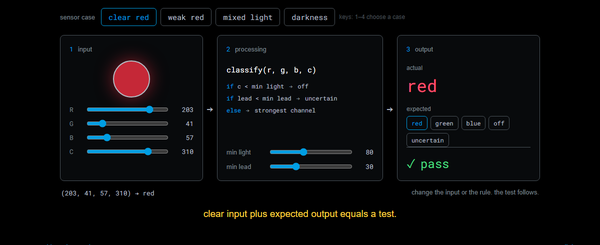
change sensor values and the classification rule, compare actual with expected output, and watch the test pass or fail.
small interactive apps, one idea each. play with them; the concepts are from the lifi project.
change sensor values and the classification rule, compare actual with expected output, and watch the test pass or fail.
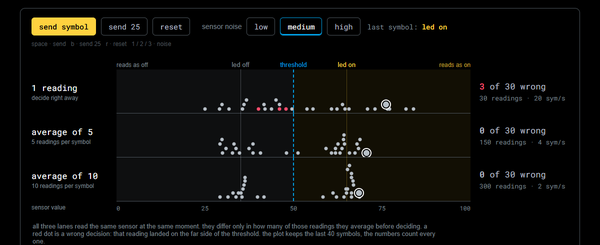
send a symbol over a noisy link and let the same readings decide it three times: alone, averaged over five, averaged over ten. fewer wrong decisions, less speed.
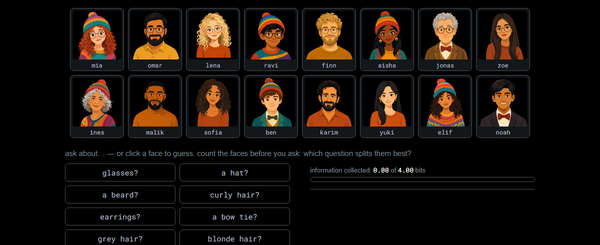
find the secret face among sixteen: every answer shrinks the crowd, the shrinking is measured in bits, and the halving strategy shows why four questions are enough.
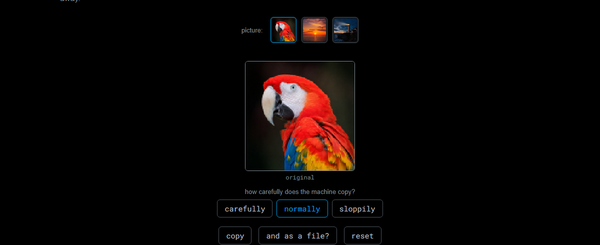
press copy and hang each generation on the wall: watch the analog picture fade copy by copy, then ask what a file would have done.
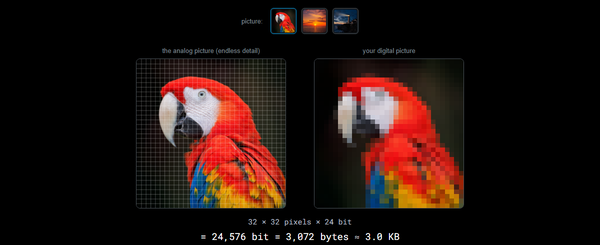
turn an analog photo into numbers: pick resolution and colour depth (down to the game boy's four greys), see the picture change, and watch the byte count grow.
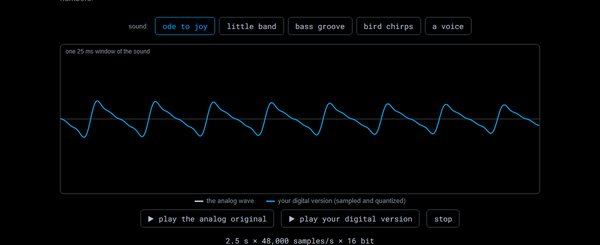
the same two cuts for sound: choose sampling rate and bit depth, see the staircase on the wave, and hear what gets thrown away.
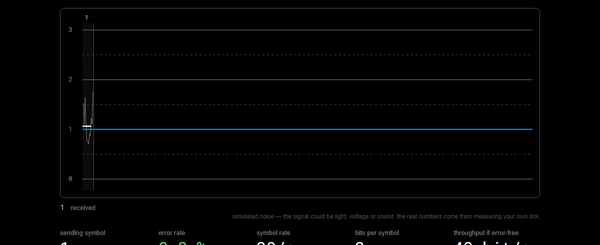
send symbols over a noisy channel, oscilloscope style: grow the alphabet, tune the window, inject a disturbance, and watch the error rate fight the throughput.
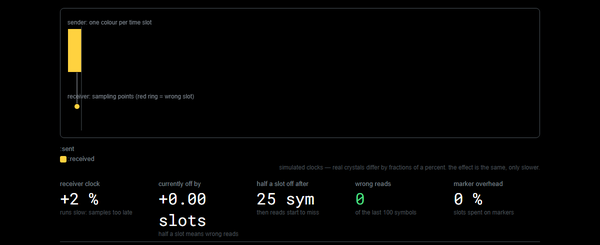
two clocks, slightly apart: watch the receiver’s sampling points wander out of the time slots until the message turns to garbage, then let a sync marker save it.
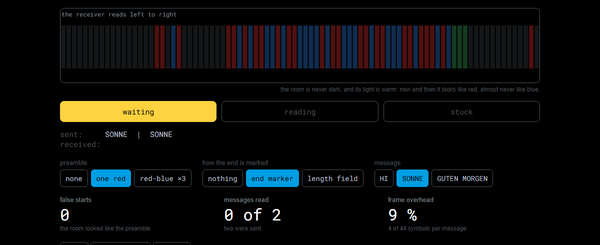
a receiver is already listening to a lit room: pick a preamble and a way to mark the end, then watch what it makes of your message. leave one out and see it miss, misfire or hang.
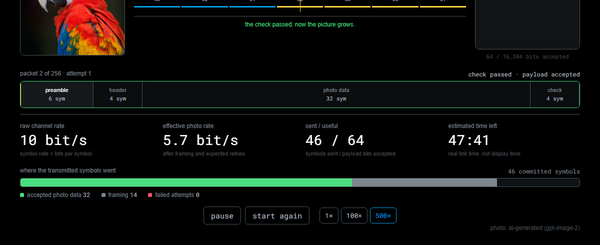
send a photo over a framed link: watch every symbol cross while headers, checks and retries consume time without growing the picture.
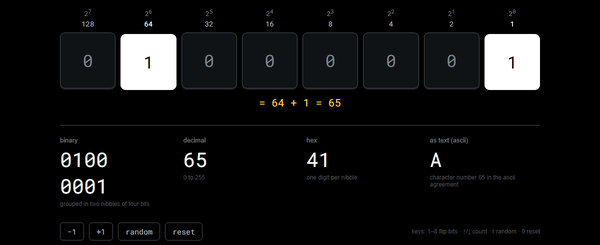
flip eight bits and watch the number appear: binary, decimal, hex, and the ascii character behind it.
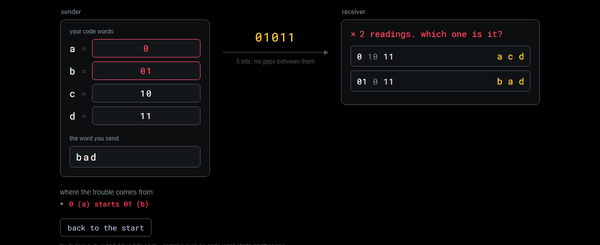
write your own code words, send a word, and see every reading the receiver could pick. get the list down to one and you have built a code that works.
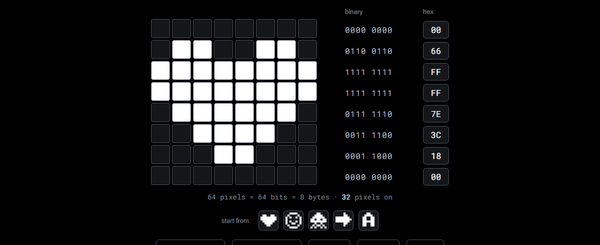
an 8×8 picture, one bit per pixel: paint and watch the bytes write themselves, edit the hex and paint with numbers, then break a byte and see the damage.
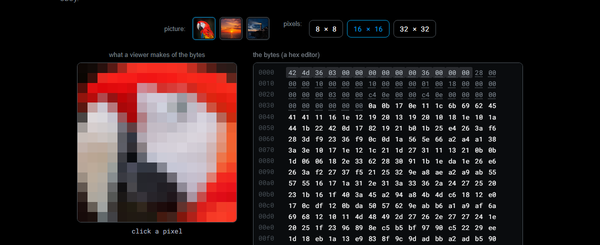
a real bitmap in a hex editor: header fields underlined, click a pixel to find its three bytes, then change a byte and watch the picture obey, or the viewer refuse.
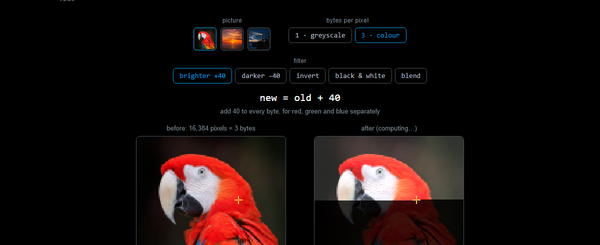
make a photo brighter one addition at a time: step through a single pixel with its bits and carries, then let the machine do the other sixteen thousand in a blink.
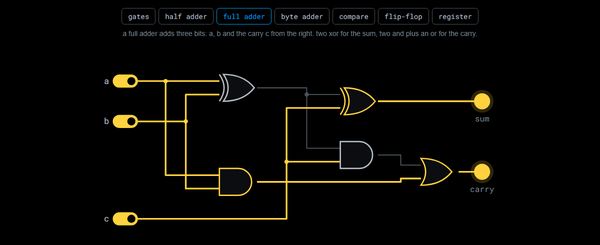
switches in, lamps out: flip the inputs of a single gate, watch a half adder carry, chain eight full adders into a byte adder, and make two gates remember a bit.
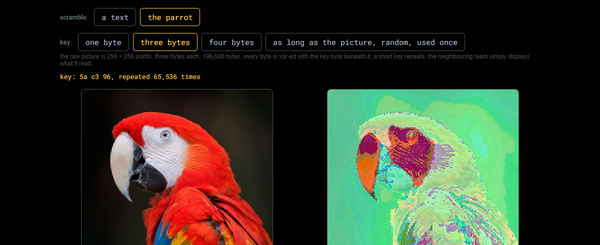
a text, a key, and xor: the key flips the bits, the same key flips them back. give it a one-byte key and try all 256, or scramble the parrot with a short key and see what survives.
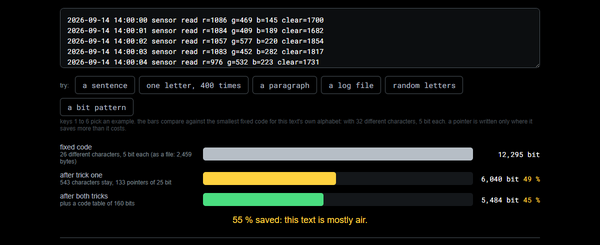
paste any text and watch it get packed as you type: repeats become pointers, frequent letters get short codes. one letter over and over squeezes to almost nothing; random letters grow.
nothing matches.
more demos will appear here as the course grows.